

Al Dente 🍝🫦
Elusive, easier to define than to achieve, and worth pursuing as you would happiness, for they are one and the same!

Today we will be discussing ‘al dente’, the meaning of this part-phrase part-philosophy, how to achieve it, and why it is important.
We'll begin with the definition of al dente, which is literally translated as ‘to the tooth’. What that means practically and culinarily is the pasta should offer some resistance to your tooth when you bite into it, and should maintain its structure once cooked. It should remain identifiable as the same shape that you put into the water when it comes out of it, and your teeth should notice when biting into it. It should be pleasantly tooth-sinkable.
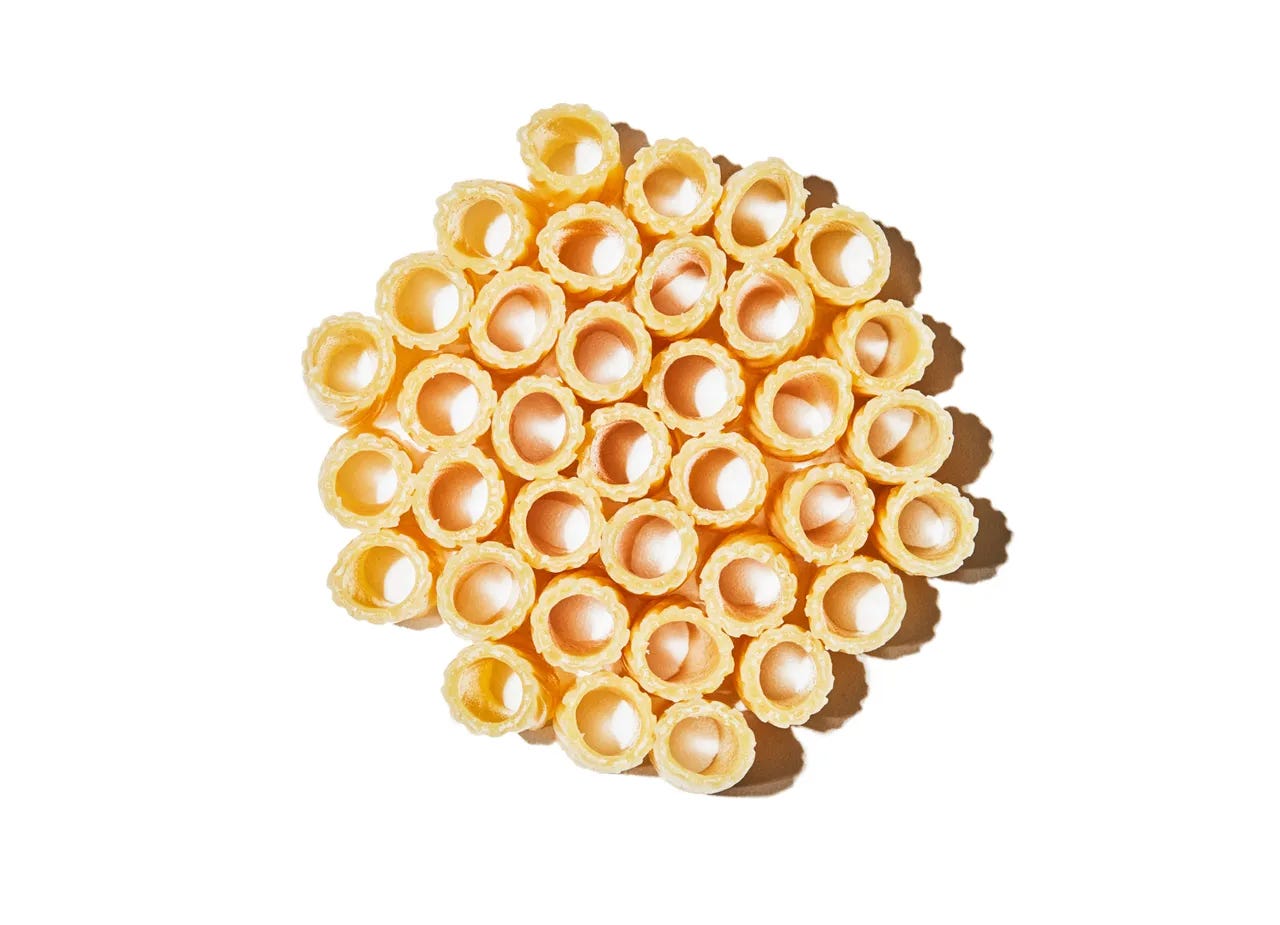
Al dente generally only refers to the texture you achieve with dried pasta because fresh pasta has too much moisture content, and dried pasta, having started its life as fresh pasta, has been dehydrated to less than half of its original water content. There are ways to achieve some semblance of al dente if you're cooking with fresh pasta, by leaving it out in open air for 30-60 min before cooking it, evaporating some of the surface moisture, however, fresh pasta is an entirely different thing texturally speaking. It's light, it's airy, it's delicate, whereas dried pasta will be more structural, rigid, noticeable in your mouth and you'll be able to sink your teeth into it.
Dried pasta should always be cooked al dente, so as to maintain the integrity of its shape and texture, and not flab or disintegrate. Pasta was once described as architecture for the mouth, and in this respect you should strive to cook your pasta the way the Romans built the pantheon, holding structural continuity as paramount.
A properly al dente pasta’s resistance to your teeth is something that is so humanly satisfying and so culturally important to Italian Cuisine that it bears studying. Having said that it is also something that is personal, and a matter of preference.
So, if you don't like such austere texture, that is totally okay! It is admittedly bizarre, but everyone gets to cook the way they want, and please cook your pasta anyhow you would like to as you can certainly make a delicious plate of food in more than one manner.
However, there is something undeniably, deeply and instinctually satisfying and rewarding about cooking your pasta to a true al dente, as well as something beautifully elusive about achieving it.
Within Italy it is a topic of much debate and regional variance. Across the Peninsula and Islands, there are different preferences and interpretations of what qualifies as al dente. Generally speaking, the further south you go, the more al dente you will find the pasta.
An extreme example of this can be found in and around Naples, where many now prefer their pasta to be cooked al chiodo, meaning like a nail, the kind you would hammer into a two by four. The March of Progress…
How to strive for al dente:
The best way to achieve an al dente pasta is first and foremost through preparation. You want to have everything set before you begin cooking because if you're scrambling for things at the last minute when your pasta is just perfectly al dente, you're going to waste time, it's going to overcook, and you will rightfully feel shame.
So make sure you have a large pot filled with plenty of rapidly boiling water. Make sure you have salted this pot with 3-5 generous pinches of course sea salt, or kosher salt. Once your salt has dissolved into the water it is time to add your pasta.
But wait, there’s more! Where are your utensils? Your colander, tongs, or spider strainer? Is your sauce ready, or will it be ready by the time your pasta is almost al dente?
Where is your serving bowl? Is it preheated? Is there cheese on the table? Where are your guests plates? Are they preheated? WHERE ARE YOUR GUESTS?! They should be seated before the pasta hits the water, as the moment your pasta is al dente it should be shoveled greedily into their eager mouths!
The point is, the last thing that should be done is your pasta.
I have had the great misfortune of having lost many perfectly cooked plates of pasta to the seeming eternity of an errant guest’s wanderings off to the bathroom or the bar at precisely the wrong moment. Please ensure this does not happen. If I could shackle my guests to their seats I WOULD!
Fortunately, such draconian measures need not be implemented as a wonderful and much more pleasurable version of shackles exists in the form of a full glass of wine. Pour generously for your guests and compel them to remain seated until all evidence of their first plate of pasta has vanished.
Now, back to your pot of rapidly boiling, properly salted water! Once the aforementioned boxes have been checked in permanent marker, it is now time to butta la pasta! or, ‘throw your pasta’. Drop your pasta in the water, and stir with a wooden spoon to keep from sticking. We use a wooden spoon because a metal utensil will draw heat out of the water and this is no good.
Cook time!
You can rely somewhat on packaging cooking instructions, however much depends on the size of your pot, how much water is in it, your stove, the alignment of the stars etc. So your best bet is to start checking your pasta 4-5 minutes before the instructions claim al dente.
The more you cook pasta the more you will shift to rely on your internal, biological-pasta-clock. You will begin to notice how the pasta feels on your wooden spoon as you stir it, the weight and resistance, how they change over time, and the sensation indicating you’re nearing al dente will eventually become second-nature.
Use your Senses!
Taste your pasta early and often! The best way to know when your pasta is al dente is to actually sink your teeth into it! Blow on it please so you don’t need to sue anyone, and taste for salt and texture. Remember, it is easier to add salt and cooking time than subtract it, so please act conservatively in these realms.
Another sense you may rely on is your sight, as pasta will cook from the outside inwards, and you will notice if you bisect your sample of pasta by biting or cutting it in half, the white center of the pasta will slowly disappear the more you cook it. In Italian, this white center is known as the anima, or soul of the pasta. Al dente lies somewhere between a faintly visible, and just-disappeared anima.
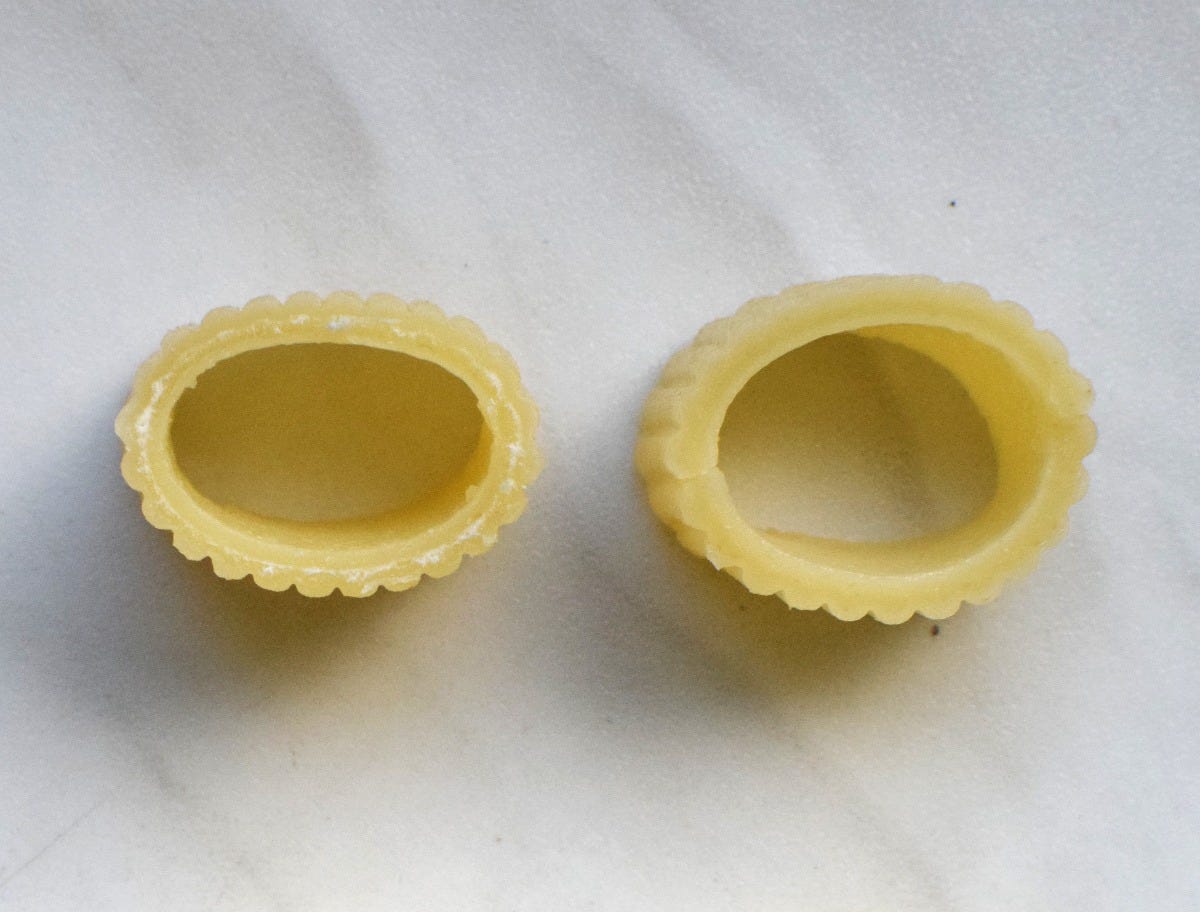
It is of paramount importance to remember that your pasta will continue cooking about 30-90 seconds after it is removed from the water. We will get into different methods of finishing your pasta and sauce at a later date, but we will begin by assuming you are combining both in your serving bowl after the pasta has been drained. If this assumption is correct, you want to remove your pasta from the water at least 30 seconds before al dente so you have the margin for error while tossing it with your sauce and serving it to your guests.
For the removal process, make sure you are saving a bit of pasta water, about a cup, or a few ladles worth in a separate bowl, as this will be used to loosen your sauce and marry it to your pasta by adding it bit by bit to your combined pasta & sauce until the desired consistency and glossy sheen has been achieved. Pasta water is the secret ingredient that creates the sum-is-greater-than-its-parts-ness, which inspires such wonder within trattorias across Italy.
What is happening here on a molecular level is the starches in the water and the fats (generally olive oil) in your sauce adhere to each other, and combine to create an emulsion which yield that beautiful, silky, creaminess without even a touch of dairy.
Now that your pasta is perfectly cooked and sauced, you must serve it rapidly to your guests - on heated plates - then you must dive headfirst into the fervent consumption of your alimentary wonder! Chew slowly and savor this alchemy, and those who join you in this ritual. Don’t forget the music!
Linked is a living list of toothy tracks we feel evoke the sonic expression of al dente. We hope it will elicit the proper mood required for you to cook your pasta properly, and leave something to sink your teeth into. Listen to it loud!
Share a video tagging us on instagram of you enjoying a plate of al dente L’Isolina Pasta while spinning these tasty tunes, and we will send 3 lucky cooks some free Pasta & Spaghetti Dust!
One final note on the benefits of cooking your pasta al dente, is that when cooked this way pasta has a lower glycemic index, meaning it digests more slowly. The digestive enzymes need to work harder, and the glucose enters the bloodstream more slowly, preventing dramatic blood sugar spikes. Everyone’s body is different but this is generally the case for most humans.
An even healthier choice would be to make sure your pasta is made from thoughtfully selected, expertly farmed, stone-milled whole grains, then mixed with cold water, and slowly drawn through bronze dies, before being dried slowly over several days to preserve the nutrients, texture and flavor. Sound like a pretty specific type of pasta? Well lucky for you, that’s how we make ours!
“L’Isolina Pasta is Exaggeratedly Delicious!”


Lastly, and to reiterate, the best way to learn this is by doing! Hooray for your and your tastebuds! Every time you cook pasta, please pay attention to the texture, the timing, and what YOU consider to be the perfect al dente!
Thank you for your attention and have a mouthwatering day!
Squadra L’Isolina